
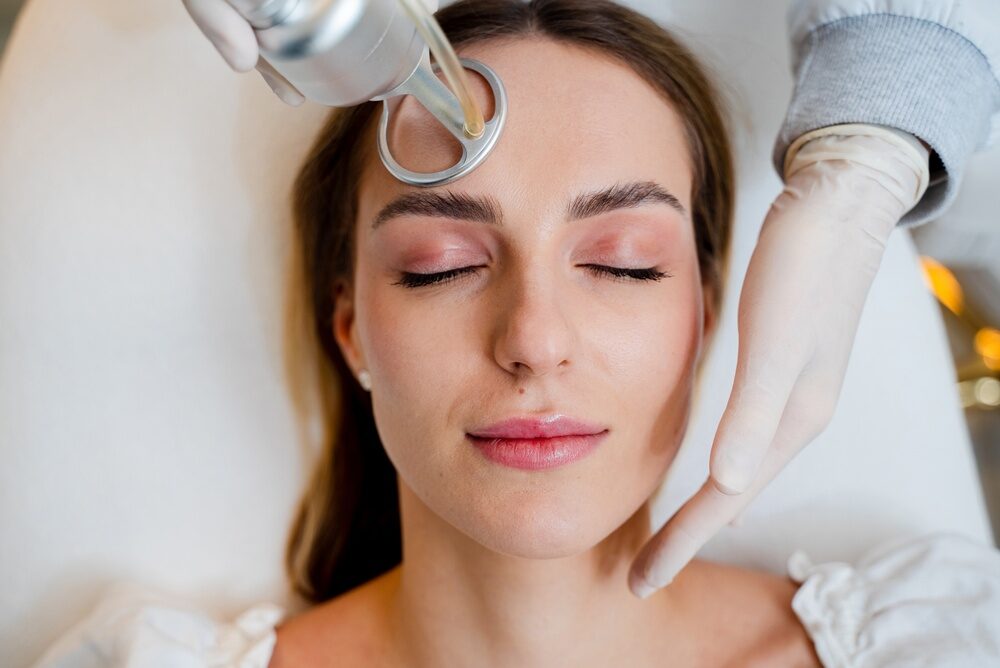

Both of these treatments use the same 2940-nm erbium wavelength, which is exactly why patients researching HALO on Long Island find the comparison so confusing. HALO is a hybrid fractional laser that pairs that ablative erbium energy with a deeper 1470-nm non-ablative wavelength, while dedicated erbium resurfacing such as Sciton TRL uses the 2940-nm wavelength on its own, at a depth the provider selects. The practical question is not which laser is stronger, but how much of the skin surface you want removed and how many days of visible healing you are willing to accept.
What the HALO Hybrid Fractional Laser Delivers
HALO treats microscopic zones of skin with two wavelengths in the same pass. Sciton describes the 2940-nm ablative component as addressing superficial texture and pore concerns, while the 1470-nm non-ablative component reaches deeper to treat photodamage and stimulate dermal remodeling.
Because the treatment is fractional, columns of untreated skin remain between the treated zones, and those intact areas speed healing. That design is why HALO is often selected by patients carrying several concerns at once rather than one isolated problem.
Typical targets include:
- Sun damage and dyschromia across the face, neck, chest, or hands
- Enlarged pores and rough surface texture
- Fine lines and early crepiness
- Selected atrophic acne scarring where fractional remodeling is appropriate
How Sciton Erbium Resurfacing Works
TRL, short for Tunable Resurfacing Laser, is controlled ablative resurfacing using the 2940-nm Er:YAG wavelength. The provider sets the ablation depth, so the same device can perform a light peel-like treatment or a considerably deeper resurfacing session.
TRL can also be run full-field, meaning the entire treated surface is ablated rather than treated in spaced columns. ProFractional, by contrast, creates separated microscopic erbium channels and leaves the skin between them intact, which shortens recovery while still driving collagen remodeling.
Anyone comparing Erbium should understand that the device name tells you very little on its own. A superficial TRL and a deep full-field TRL are different procedures with different wound care, different erythema timelines, and different risk profiles.
Hybrid Fractional Versus Dedicated Ablative Resurfacing
HALO is not truly “versus erbium” in a wavelength sense, since HALO already contains fractional 2940-nm erbium energy. The honest comparison is between a hybrid fractional strategy and a dedicated ablative erbium strategy.
HALO generally favors a balance between correction and recovery, pairing surface ablation with deeper non-ablative coagulation in one session. Erbium resurfacing shifts the emphasis toward ablation, and it can be tuned from gentle surface renewal up to substantial removal of damaged tissue.
Er: YAG has very high water absorption, which produces efficient ablation with comparatively limited residual thermal injury next to a CO2 laser at 10,600 nm. Recovery after resurfacing varies widely based on the device and the settings used, which is consistent with what patients experience across these options.
Matching the Laser to the Dominant Concern
Provider selection usually comes down to what is driving the complaint rather than brand preference. A few patterns hold up well in practice:
- Diffuse photodamage plus texture: HALO often suits patients who want pigment, pores, and fine lines addressed together with a moderate recovery window.
- Pronounced wrinkles or more advanced texture: deeper erbium resurfacing removes controlled layers of damaged skin and can reach an endpoint fractional treatment may not.
- Superficial pigment and vascular color only: broadband light phototherapy frequently handles this with less downtime than either resurfacing option.
- Laxity and collagen remodeling: RF microneedling such as Morpheus8 delivers heat at selected depths with needles and may be the better match when color is not the primary issue.
Among the medspa services Huntington patients ask about most, laser resurfacing generates the largest number of questions, largely because marketing language tends to blur the difference between a light session and an aggressive one.
Recovery Expectations You Can Plan Around
HALO recovery depends on density and depth, though most patients can plan for roughly several days of visible healing. Sciton aftercare materials describe warmth and redness first, followed by bronzing and rough micro-crusting, sometimes called MENDs, before the surface sheds and clears.
Erbium downtime is harder to quote in a single number because it scales directly with ablation depth. A light TRL may behave somewhat like a chemical peel, while a deep or full-field treatment involves active wound care, longer erythema, and a slower return to makeup and sun exposure.
A useful rule: at comparable clinical aggressiveness, Er: YAG often heals faster than CO2 because of reduced residual thermal injury, but a deep erbium treatment will still outlast a light fractional session by a wide margin.
How Many Sessions Each Approach Requires
Sciton describes many HALO plans as one to two treatments, with the actual number depending on severity, treatment intensity and the endpoint the patient wants. Some patients prefer a single more corrective session; others choose lighter staged passes spaced several weeks apart.
Erbium plans follow the same logic in reverse. One deeper resurfacing session may accomplish what three light sessions would, at the cost of a longer and more supervised recovery.
Acne Scars Deserve a Separate Conversation
Both HALO and fractional or deeper Er: YAG resurfacing can improve selected atrophic scars and the surrounding texture. Scar morphology still decides the plan more than the device does.
Tethered rolling scars often need subcision before any resurfacing produces a satisfying result, and narrow ice-pick scars usually respond better to focal techniques such as TCA CROSS. Patients with mixed scar types typically do best with a staged, multimodal plan rather than a single laser series.
Questions Worth Asking at Your Consultation
Depth should be chosen for the indication, not for marketing intensity, so a good consultation spends more time on your skin than on the device brochure. Bring up the following:
- What ablation depth or treatment density is being planned, and why that level for my concern?
- How many days of visible recovery should I block off, realistically?
- What is my Fitzpatrick skin type, and what is my post-inflammatory hyperpigmentation risk?
- Which parts of my result will come from pigment correction versus collagen remodeling over the following months?
Sun protection after either treatment is non-negotiable, since freshly resurfaced skin pigments readily. Daily broad-spectrum SPF 30 or higher, as recommended by the National Cancer Institute, protects both your result and your skin health.
Frequently Asked Questions
Is HALO or Erbium Better for Deep Wrinkles?
Deeper erbium resurfacing generally reaches more pronounced wrinkles than a standard HALO session, because it removes controlled layers across the treated surface. HALO can soften fine lines and early etching well, but severity that has resisted lighter treatment usually justifies the longer erbium recovery.
How Long Does HALO Recovery Actually Take?
Most patients see roughly three to seven days of visible recovery after HALO, including redness, bronzing and rough texture before the skin clears. Higher density or deeper settings extend that window, and swelling during the first 48 hours is common.
Can Both Treatments Be Combined?
Yes, and combination planning is routine in advanced resurfacing. TRL and ProFractional can be layered in a single session, and light-based phototherapy is often paired with fractional resurfacing so that color and texture are addressed together.
Which Laser Has Less Downtime, Erbium or CO2?
At matched aggressiveness, Er: YAG at 2940 nm typically heals faster than CO2 at 10,600 nm because it leaves less residual thermal coagulation. That comparison collapses, however, if the erbium treatment is deep and full-field while the CO2 treatment is light and fractional.
Am I a Candidate If I Have Melasma or Darker Skin?
Candidacy depends on skin type, history of post-inflammatory hyperpigmentation and whether pigment is epidermal or dermal, so an in-person evaluation is required. Conservative settings, pretreatment skincare, and strict sun avoidance reduce risk considerably.
Schedule Your Laser Resurfacing Consultation
A short in-person skin assessment settles the HALO versus erbium question faster than any article can, because depth, skin type, and your available recovery time decide the plan. Contact Lysty Aesthetics and Wellness to review your concerns and map out a resurfacing approach that fits your schedule.