
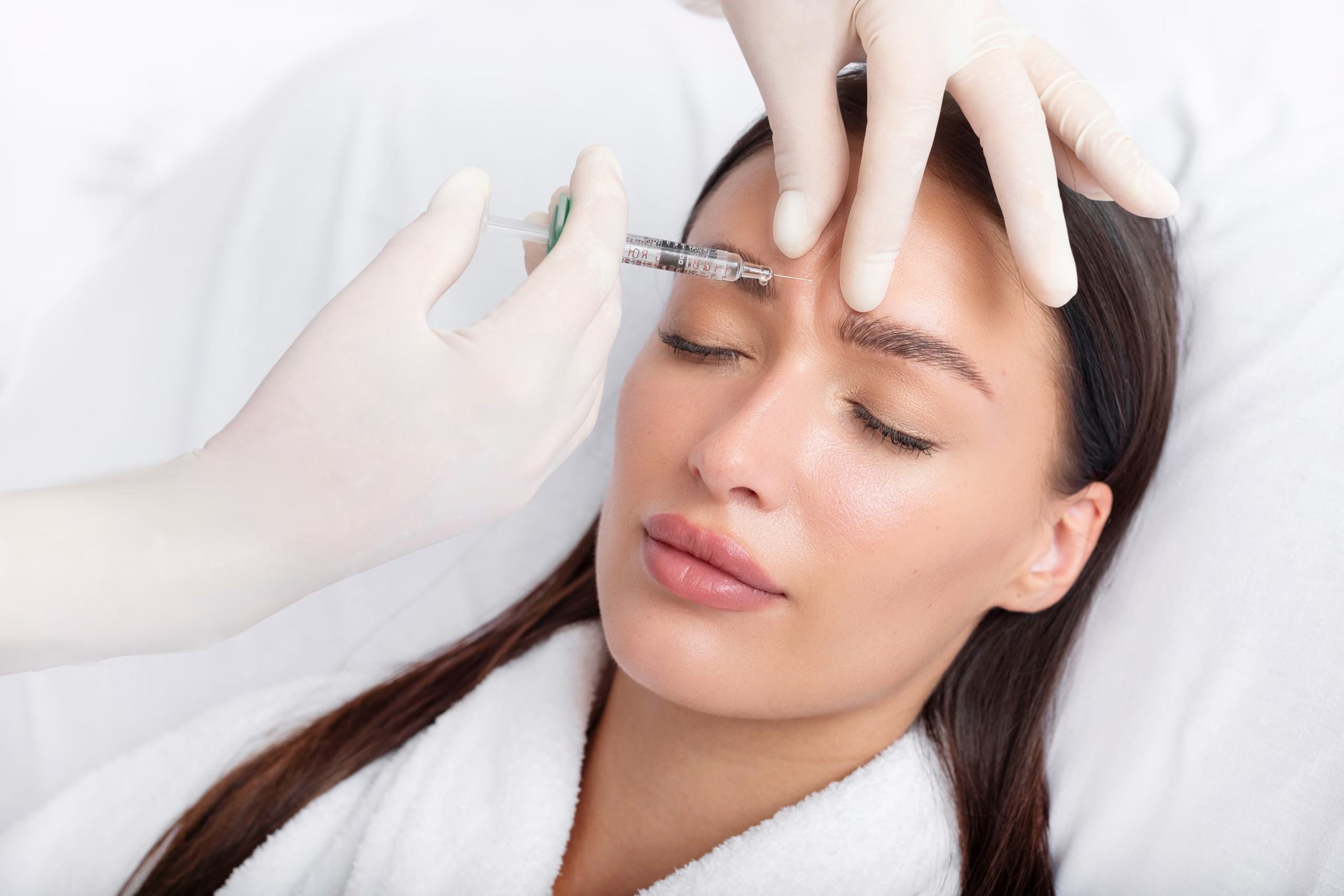

Direct sun exposure should be avoided for the first 24 to 48 hours following a Botox® treatment, with strict shade being your safest choice during the first day.
Contrary to popular belief, this post-treatment rule isn’t actually about UV rays damaging the botulinum toxin molecule itself. Instead, it comes down to heat, vasodilation (blood flow), and giving the neurotoxin time to bind into the targeted facial muscles. After 48 hours, normal outdoor activities, paired with a quality broad-spectrum SPF 30+, can safely resume.
Here is everything you need to know to protect your medical cosmetic treatment in Huntington and optimize your results.
What Is Actually Happening Under Your Skin (Hours 0–48)
Botulinum toxin type A (Botox®, Dysport®, Xeomin®, or Daxxify®) does not work instantly.
The Three-Phase Timeline: Injection Phase ➔ 24–48 Hours Binding Phase (Heat & UV Danger Zone) ➔ Days 3–7 Visual Smoothing Phase
Cellular Binding Window: Once injected into precise facial targets (like the glabella, forehead lines, or crow’s feet), the protein molecules take 24 to 48 hours to fully bind to the nerve receptors at the neuromuscular junction. Visual muscle relaxation occurs gradually over 3 to 14 days.
The Danger of Vasodilation: UV radiation and thermal heat raise your skin’s temperature and trigger vasodilation—the widening of blood vessels and rapid acceleration of local facial blood circulation.
The Risk of Toxin Diffusion (Eyelid Ptosis): If blood flow surges during the early binding window, the neurotoxin can migrate (diffuse) away from the intended target muscle and into adjacent tissue. If toxin migrates from the glabella or forehead into the upper eyelid muscle (levator palpebrae superioris), it can cause temporary eyelid ptosis (drooping), which may take weeks to resolve.
Amplified Bruising and Inflammation: Enhanced circulation near fresh micro-injections amplifies localized bruising, swelling, and redness, prolonging your downtime unnecessarily.
Post-Botox Sun & Heat Exposure Timeline
0 to 24 Hours (Critical Window)
Sun & UV Guidance: Strict Shade. Indoors or full shade only. No sunbathing, tanning beds, or direct sun exposure.
Heat & Physical Activity: No Heat or Sweat. Avoid saunas, hot tubs, steam rooms, hot showers, hot yoga, and workouts. Keep upright for 4+ hours.
Approved Products: Cool compress (no ice directly on skin). Clean, gentle mineral sunscreen (zinc/titanium) patted gently after 4–6 hours.
24 to 48 Hours (Caution Window)
Sun & UV Guidance: Incidental Sun Only. Brief outdoor exposure OK. Reapply broad-spectrum SPF 30+ every 2 hours. Wear a wide-brimmed hat.
Heat & Physical Activity: Light Activity. Gentle walking is fine. Continue avoiding saunas, steam rooms, and intense cardio that flushes the face.
Approved Products: Mineral SPF, standard gentle cleanser, lightweight hydration.
Day 3 and Beyond (Normal Activity)
Sun & UV Guidance: Resume Routine. Safe for full outdoor activities with daily SPF 30+, sunglasses, and reasonable shade breaks.
Heat & Physical Activity: Full Clearance. Workouts, saunas, hot tubs, and hot yoga may resume unless advised otherwise for paired procedures.
Approved Products: Daily anti-aging skincare routine (Retinoids, Vitamin C, SPF).
The Hidden Culprit: Non-Sun Heat Sources
Sunlight gets all the credit, but any heat source that flushes your face carries identical risks of toxin migration.
The “First 48 Hours” Heat Checklist
Tanning Beds: High-intensity UV combined with direct radiant heat near the face. (Never recommended).
Saunas & Steam Rooms: Extreme ambient heat triggers immediate, rapid vasodilation.
Hot Tubs & Hot Baths: Core body temperature spikes, increasing systemic blood flow.
High-Intensity Cardio / Hot Yoga: Heavy facial flushing, sweat, and bending over (inversion) put pressure on facial muscles before the toxin binds.
Facials & Massage: Avoid any face rubbing, gua sha, or cosmetic facials for at least 7 to 14 days post-treatment.
Note on Combo Treatments: If you are combining Botox with Dermal Fillers, Microneedling, or Chemical Peels, your post-care recovery window will extend. Fillers and deep peels require stricter sun avoidance to prevent post-inflammatory hyperpigmentation (PIH). Always confirm treatment sequencing with your injector.
Planning Around Your Schedule & Summer Travel
Strategic planning ensures you get your glow without risking your results:
Book Early in the Week: Schedule your treatment on a Wednesday or Thursday morning. By Saturday afternoon, your 48-hour critical binding window is safely behind you.
Beware the Car Ride Home: UVA rays easily penetrate vehicle glass. Driving home right after a midday appointment leaves the side of your face exposed. Keep a wide-brimmed hat in your car and flip down the visor.
Outdoor Logistics: Pushing a day at the beach, pool, or boating back by just 48 hours protects your aesthetic investment and prevents unnecessary swelling.
How Sun Protection Preserves Your Botox Investment
While a sunny day won’t “break down” the injected toxin inside your muscle, chronic UV exposure degrades collagen and elastin in the dermis.
How UV Accelerates Wrinkles: UV Exposure ➔ Collagen Breakdown ➔ Static Wrinkles ➔ Botox Wears Off Visually Faster
Prevent Static Lines: Botox temporarily paralyzes dynamic wrinkles (lines formed by expression). However, UV damage creates static wrinkles (lines present at rest). If skin elasticity collapses due to sun damage, your facial lines will still show even when the muscle is relaxed.
The Periorbital Shield: Squinting in bright sunlight repeatedly contracts the orbicularis oculi muscle, fighting against your crow’s feet treatment. Invest in UV400-rated, wide-frame sunglasses to keep these muscles relaxed while outdoors.
Dermatologist Gold Standard: Apply a nickel-sized amount of broad-spectrum SPF 30+ mineral sunscreen daily, reapplying every two hours when outdoors.
When to Contact Your Injector
Normal post-injection symptoms (mild redness, tiny pinpoint marks, or slight swelling) usually clear within 24 to 72 hours.
Expected vs. Concern Symptoms
Expected (Self-Limiting): Minor bruising at the site, slight tenderness, light headache.
Call Your Provider Immediately: Drooping of the eyelid or eyebrow (ptosis), asymmetrical smile, double vision, spreading redness/heat at the injection site, or signs of infection.
If eyelid ptosis occurs, your provider can prescribe specialized apraclonidine eye drops to temporarily lift the eyelid until the toxin’s effect naturally softens.
Schedule Your Custom Consultation
Are you ready for radiant, smooth skin? Book your consultation for Botox in Suffolk County. We make every treatment plan and aftercare routine around your schedule, travel, and lifestyle goals.
Book a consultation online to discuss treatment areas, dosing, and the best week to come in.